

For most of the AI boom, investors had a simple playbook: buy the companies selling GPUs, the powerful chips used to train large AI models.
Bank of America now says that trade is becoming too narrow.
The next phase of AI will be driven by “agentic AI,” systems that can plan, fetch data, call tools and complete tasks with less human prompting.
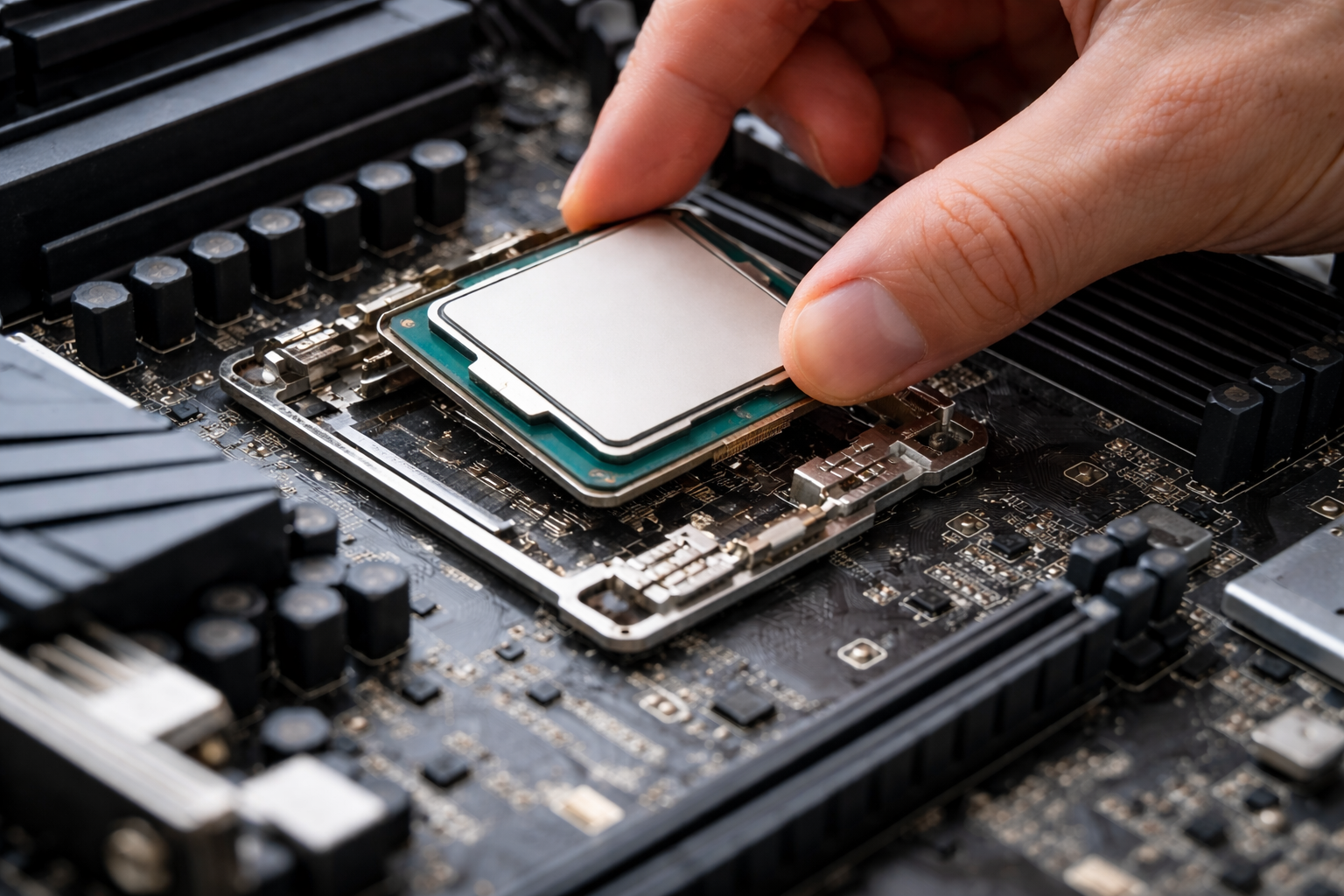
That makes CPUs more important, because they coordinate the work around the model.
BofA projects the server CPU market will grow from about $43 billion in 2026 to $125 billion by 2030, a 31% compound annual growth rate.
AI trade is changing
The shift does not mean GPUs are yesterday’s story and training bigger models would require huge clusters of accelerators.
But agentic AI changes what happens after those models are trained.
A chatbot answers a prompt. An AI agent may search a company database, pull customer records, compare options, run a calculation and trigger a workflow.
That kind of system needs GPUs for heavy math, but it also needs CPUs to manage memory, move data, orchestrate tools and keep multiple steps running in order.
That is why BofA’s call matters. Arya’s team described CPUs as the “control plane of AI inference,” with agentic workloads becoming “structurally even more CPU-intensive.”
The firm also argues this is not a GPU-versus-CPU rotation, but an expansion of the data-center market itself.
BofA’s analyst make his case
Vivek Arya, BofA Securities’ closely followed semiconductor analyst, sees Nvidia and AMD as the two cleanest ways to play the CPU-heavy leg of the AI buildout.
For Nvidia, the case starts with its ability to sell full systems, not just chips.
BofA recently raised its Nvidia price target to $320 from $300 and kept a Buy rating, implying roughly 40%-plus upside from recent trading levels.
The next catalyst is Vera Rubin, Nvidia’s next-generation AI platform.
Nvidia says Rubin-based products will be available from partners in the second half of 2026, with major cloud providers expected to deploy Vera Rubin-based instances.
The platform includes the Vera CPU alongside Rubin GPUs, networking and other infrastructure.
BofA also flagged that a full Vera Rubin pod could move toward a roughly one-to-one CPU-to-GPU ratio, a sign of how central CPUs are becoming in AI infrastructure.
There are risks as BofA noted Nvidia’s gross margin could slip modestly over time as high-bandwidth memory costs rise and competition increases from AMD’s MI450 series and custom chips built by hyperscalers.
For AMD, the appeal is more straightforward as it already sells strong server CPUs, and it has a credible GPU roadmap.
Arya earlier lifted AMD’s target to $450, calling it a “top compute pick” and noting that its AI share could move from about 6% in 2026 to double digits by 2030.
A later BofA update raised the target again to $500 from $450, citing CPU strength, AI share gains and infrastructure spending.